HomeLife Miracle Realty Ltd., Brokerage
HomeLife Miracle Realty Ltd., Brokerage
A plain-English guide to every major home buyer program in Ontario, from the FHSA and RRSP Home Buyers’ Plan to the land transfer tax refund and the new GST/HST rebates, with the eligibility rules for each one.
On this page
I usually reply the same day.
I'll be in touch shortly. For anything urgent, call or text 647-806-0747.
At a Glance
Most first-time buyers in Cambridge and Waterloo Region can stack several of these home buyer programs together. The FHSA and the Home Buyers’ Plan help you save the down payment, the land transfer tax refund and the tax credit cut your closing costs, and the GST/HST rebates only apply if you buy a newly built home.
You can use the FHSA and the RRSP Home Buyers’ Plan for the same home, as long as you meet the rules for each one when you withdraw. A couple who both qualify can put a lot of tax-sheltered money toward one purchase.
The savings accounts, the land transfer tax refund and the tax credit work on resale and new homes. The GST/HST rebates only apply to new or substantially renovated homes, because resale homes do not charge HST.
Each of these home buyer programs defines a first-time buyer slightly differently. For the FHSA, HBP and GST/HST rebate, it usually means you have not lived in a home you or your spouse owned in the current year or the previous four years. The land transfer tax refund is stricter: you can never have owned a home anywhere in the world.
| Program | Who it helps | Maximum benefit | Home type |
|---|---|---|---|
| First Home Savings Account (FHSA) | First-time buyers | $40,000 saved tax-free (plus growth) | Resale or new |
| RRSP Home Buyers’ Plan (HBP) | First-time buyers | $60,000 per person from your RRSP | Resale or new |
| Ontario land transfer tax refund | First-time buyers | $4,000 | Resale or new |
| First-time home buyers’ GST/HST rebate (federal) | First-time buyers | $50,000 | New homes only |
| Ontario first-time buyer HST rebate | First-time buyers | $80,000 | New homes only |
| Ontario enhanced new housing rebate | All buyers (agreements Apr 1, 2026 to Mar 31, 2027) | Up to $130,000 combined | New homes only |
| GST/HST new housing rebate | Anyone buying a new home to live in | About $6,300 federal + $24,000 Ontario | New homes only |
| Home buyers’ amount (tax credit) | First-time buyers | $1,500 off your income tax | Resale or new |
Amounts are the maximums. What you actually get depends on your price, your situation and the rules on your signing date.
Program 1
The FHSA is the most powerful of the home buyer programs for most people. Contributions are tax-deductible like an RRSP, and withdrawals for your first home are tax-free like a TFSA. You do not pay it back.
Up to $8,000 a year, to a lifetime maximum of $40,000. Unused room carries forward, but you can only carry forward up to $8,000, so the most you can put in in one year is $16,000. Room only starts building once you open the account, so open it early even if you only deposit a small amount.
An FHSA can stay open for up to 15 years, or until the end of the year you turn 71, whichever comes first. If you do not buy a home, you can transfer the money to your RRSP or RRIF without tax and without using RRSP room.
Each person has their own FHSA and their own $40,000 limit. You can buy with a partner who is not a first-time buyer, but only the person who qualifies can make a tax-free withdrawal from their own account.
Tip: if you have an RRSP, the FHSA and the Home Buyers’ Plan can both be used for the same purchase. Ask your bank or adviser which to fund first.
Program 2
The Home Buyers’ Plan lets you borrow from your own RRSP, tax-free, for your down payment or closing costs. Unlike the FHSA, this is a loan to yourself, so it has to be paid back into your RRSP over time.
Up to $60,000 per person for withdrawals made after April 16, 2024. A couple who both qualify can withdraw up to $120,000 for the same home.
You have 15 years to repay, at a minimum of one-fifteenth of the amount each year. Repayments normally start in the second year after the year you withdraw. For withdrawals made between 2022 and 2025, a temporary rule pushed the first repayment out to the fifth year. If you skip a payment, that year’s amount is added to your taxable income.
Money has to sit in your RRSP for at least 90 days before you can withdraw it under the HBP, or you lose the tax deduction on that contribution. Plan your contributions well before closing.
You fill out CRA Form T1036 and give it to your RRSP provider for each withdrawal.
Program 3
Every buyer in Ontario pays land transfer tax on closing. If you qualify as a first-time buyer, the province refunds up to $4,000 of it. That covers the full tax on homes up to about $368,000 and takes $4,000 off anything more expensive. Use my land transfer tax calculator to see your exact number.
Most buyers never see a separate cheque: your real estate lawyer claims the refund when the deed is registered, so you simply pay less on closing. If it was missed, you can apply to the Ministry of Finance within 18 months of closing.
The refund is reduced to match the share of the home owned by the person who qualifies. For example, a first-time buyer who owns 50% with a parent can claim up to 50% of the refund.
Programs 4 to 7
If you are buying a brand-new home from a builder, HST is 13% of the price, and that can add tens of thousands of dollars. These four home buyer programs give a lot of it back. They only apply to newly built or substantially renovated homes that you will live in, not to resale homes.
Became law in March 2026. Removes the full 5% federal GST on new homes up to $1 million, a rebate of up to $50,000, and gives a reduced rebate on homes between $1 million and $1.5 million. It covers agreements signed on or after March 20, 2025 and before 2031, where construction starts before 2031 and is substantially complete before 2036. It is a once-in-a-lifetime rebate.
Ontario’s matching rebate removes the full 8% provincial portion of HST, up to $80,000, on new homes up to $1 million for first-time buyers, with a reduced amount between $1 million and $1.5 million. It is retroactive to March 20, 2025, and the CRA began accepting applications in June 2026.
For agreements signed between April 1, 2026 and March 31, 2027, Ontario and Ottawa offer up to $130,000 of HST relief on qualifying new homes, even if you are not a first-time buyer. The home must be your primary residence, construction must start by December 31, 2028, and it must be substantially complete by December 31, 2031.
Anyone buying a new home to live in can get this older rebate: up to about $6,300 of the federal portion on homes under $450,000, and up to $24,000 of the Ontario portion with no price cap. Most builders build it into the price and claim it for you.
Read the new home agreement carefully. Many builders ask you to assign the rebates to them and set the price on that basis. If you turn out not to qualify, you may have to pay the builder the difference on closing. New condos come with a 10-day cooling-off period, but new freehold homes usually do not, so have a lawyer review a freehold agreement before you sign it.
Program 8
This is the simplest of the home buyer programs: you claim $10,000 on line 31270 of your tax return for the year you buy, which reduces your federal income tax by up to $1,500. You and your spouse can split the claim, but the total cannot be more than $10,000.
You or your spouse or common-law partner bought a qualifying home, and you did not live in another home owned by you or your spouse in the year of purchase or the four years before. People who qualify for the disability tax credit, or buy for a related person with a disability, may also qualify.
A house, semi, townhouse, condo, mobile home or a share in a co-op that gives you an equity interest, registered in your name or your spouse’s, that you plan to live in within a year of buying.
Mortgage Rules
These are not grants, but they change how much you need and how much you can borrow.
5% of the first $500,000 of the price and 10% of the portion between $500,000 and $1.5 million. Homes at $1.5 million or more need 20% down. With less than 20% down, you need mortgage default insurance, and Ontario charges 8% sales tax on the premium, payable in cash on closing.
First-time buyers, and anyone buying a newly built home, can get an insured mortgage with a 30-year amortization instead of 25 years. That lowers the monthly payment, though you pay more interest over time.
You still have to qualify at the higher of your contract rate plus 2% or 5.25%. A mortgage pre-approval tells you your real budget before you start looking.
Not Your First Home?
Most home buyer programs are for first-time buyers living in the home. If you already own, or you are buying a cottage, a second home or a rental property, different rules apply. Here is what changes.
A rental property you will not live in usually needs at least 20% down, since default insurance is not available for most non-owner-occupied rentals. If you buy a two- to four-unit property and live in one unit, insured financing with a smaller down payment may be possible. For a second home you will use yourself, ask a mortgage broker about the options.
The FHSA, HBP, land transfer tax refund and tax credit are out if you already own and live in a home. On new builds, the regular GST/HST new housing rebate only applies to your own residence, but landlords buying a new home to rent out long term may qualify for the GST/HST new residential rental property rebate. Ontario’s enhanced rebate also includes some qualifying rental properties.
Investors pay the same Ontario land transfer tax as everyone else, with no refund. Buyers who are not Canadian citizens or permanent residents also pay the 25% Non-Resident Speculation Tax, and a federal ban on most foreign buyers of residential property remains in place.
Only one home per family can be your principal residence for a given year. When you sell a rental or second property, half of the capital gain is taxable. If you sell a home you have owned for less than 365 days, the federal anti-flipping rule can treat the whole profit as business income unless an exception applies, such as a job relocation or a divorce.
Rent is taxable income, but you can deduct expenses like mortgage interest, property tax, insurance, repairs and property management. Keep every receipt and talk to an accountant before you buy.
Ontario allows up to three residential units on many urban lots, subject to local zoning and the Building and Fire Codes. Adding a legal basement suite can help with the mortgage, and some insured refinancing programs help pay for it. Check with the city before you count on that income, and lease it out using the Ontario Standard Lease.
Yes. As long as you meet the conditions of each one when you withdraw, you can use both for the same home.
The FHSA, HBP, land transfer tax refund and home buyers’ tax credit all work on resale homes. The GST/HST rebates only apply to new homes.
For the FHSA, HBP, tax credit and GST/HST rebate, you may be, because they look back four calendar years. For the Ontario land transfer tax refund, no: you must never have owned a home anywhere in the world.
Your lawyer usually claims the land transfer tax refund on closing. Builders often credit the GST/HST rebates in the price. The tax credit is claimed on your own tax return, and FHSA and HBP withdrawals are arranged with your bank.
Yes. All of them are federal or Ontario-wide, so they apply in Cambridge, Kitchener, Waterloo, Guelph, Ayr, Woodstock and everywhere else in the province.
Sources: CRA: First home savings account · CRA: Home Buyers’ Plan · Ontario: Land transfer tax refunds for first-time homebuyers · CRA: First-time home buyers’ GST/HST rebate · Ontario news release: Expanded HST rebate · TRREB: Ontario enhanced new housing rebate · CMHC: Mortgage loan insurance
General information only, not legal, tax or financial advice. Rules change, so always confirm with the official sources above and with a lawyer, accountant or mortgage professional for your situation.
Put your programs to work
Once you know which programs you qualify for, these searches show homes in a typical first-home price range in Cambridge, Kitchener, Waterloo, Guelph and Woodstock.
Condo apartments across the region.
See listings
Townhouses with exterior upkeep included.
See listings
No condo fees and your own land.
See listings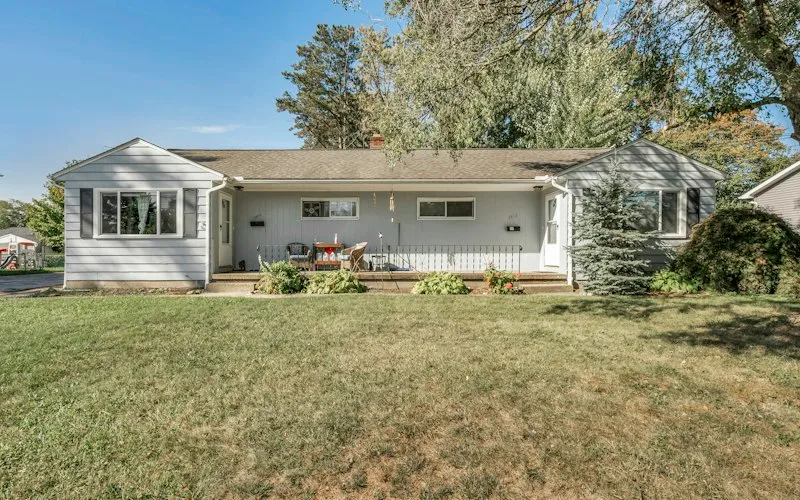
Every home type in a first-time buyer budget.
See listings
The latest homes to hit the market, newest first.
See listings
Saving in your FHSA while you rent? Start here.
See listingsListings open on jeewansidhu.ca, my MLS® search site, updated regularly from the TRREB and Cornerstone (ITSO) MLS® systems. Information is deemed reliable but not guaranteed. Buying in Cambridge? See my first-time home buyer checklist. Card photos are illustrative, not the actual listings.
 Jeewan Sidhu, REALTOR®Usually replies the same day
Send me a quick message with your situation. I will help you map out which programs fit and how much you could save. No pressure, no obligation.